
Corporate indebtedness is now twice what it was before the global financial crisis; banks' bad loans ratio is 3.5 times higher.

The road ahead for the markets in the short term will depend on external factors rather than domestic developments.
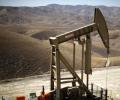
Higher crude oil prices also translate into better corporate earnings for India's top companies

The gap between Nifty's price-earnings multiple and economic growth is at a 12-year high

With commodity markets remaining soft and uncertain, it is likely the money will flow into equity markets with strong upsides, such as India.

Most analysts expect growth in the sales of Nifty-50 companies to decelerate, albeit marginally, in the quarter ended December compared to the corresponding period of 2013-14, with metals and real estate companies pulling down earnings.

This is largely on the back of Tata Steel's expansion at Kalinganagar, as well as JLR's in China and Brazil

If financials and oil sectors were removed, India Inc has done quite well.

In the domestic market, the Tata Group has lost ground in the passenger car business.

That resulted in a 50-basis point improvement in operating profit margins on a sequential basis.

But experts say downside limited, pockets of opportunities for investors

The markets gained nearly 7 per cent in the 4 trading sessions of March.

After years of losing money on two of the group's biggest bets - global steel business and domestic passenger cars - there are strong signs of a revival in both businesses.

Total net debt-equity ratio improves for third consecutive year, while investment in new projects hits a 10-year low, says Krishna Kant.
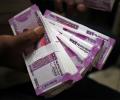
Fresh investments by corporates up just 5.8% in FY17, lowest since 1992

Earnings spread for foreign investors down to 10-year low of 1.1 per cent, from 2 per cent at the beginning of the year and record high of nearly 5 per cent in 2013

World trade has been growing slower than world GDP since 2012.

With cash -- the primary medium of exchange -- all but disappearing, it is now unlikely that the expected fillip to demand on account of a good monsoon and proceeds from the Seventh Pay Commission payout will materialise.

Mid- and small-cap companies seem to have done better than top-tier companies

Corporate India at present is more indebted than all state govts put together.
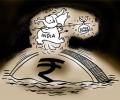
FIIs have offloaded stocks worth Rs 13,110 crore

This weakness is likely to continue in the near-term.

Many analysts find market expensive, even at current levels.

For equity investors, the risk-to-reward ratio is worsening.

Indian CEOs might like to make some serious course correction.

Wiping off nearly Rs 4 lakh crore of investors' wealth during the day, benchmark Sensex crashed on Friday.

The rise in India Inc's market value was led by asset-light firms.

Indian companies typically have higher return on equity.

Benchmark share indices gained for the fifth straight session on Thursday led by index heavyweight Reliance Industries.
.jpg)
Revenue yield on every rupee of investment fell to Rs 1.06 in FY13 from Rs 1.20 in FY08.

The sharp fall in the rupee's value against the dollar during the July-September quarter, it turns out, has come as a boon for corporate earnings.

Investors turn their attention to export-driven sectors.

Fourteen per cent of the $16 billion invested by Ratan Tata in M&As abroad has been written off by his successor.

India Inc did not perform well during December quarter.
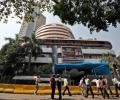
Stock prices is due to valuation expansion

Net profit grew 25.4% in Q4 but revenue growth, lower at 8.5%, suggests lack of volume expansion.

Companies from the capital goods space will under-perform.

Technically, the Indian economy is on road to recovery.

Adani Enterprises plans to invest a total of $25 billion in the next five years.
